How to Clean Windows: The Complete UK Guide

Inside: Use two microfibre cloths and a 1:1 white vinegar and water solution. Work from top to bottom, in the shade. Buff dry immediately – do not let the liquid evaporate on its own.
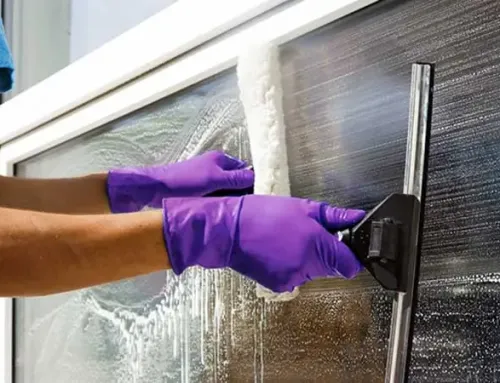
Outside (ground floor): Use the same method, with a squeegee for larger panes.
Outside (first floor and above): Use a telescopic extension pole with a scrubber head and squeegee – from the ground, no ladder needed.
How to Clean Windows Streak-Free
Most streaky windows come down to three things – and none of them require expensive products to fix.
Too much soap leaves a film that dries visibly on the glass. A few drops of washing-up liquid are enough – not a squeeze.
Hard tap water leaves calcium and magnesium behind as it dries. This is why windows can look worse after cleaning than before.
Liquid left to dry on its own is the single most common cause of streaks. Remove it before it evaporates – every time, without exception.
Fix these three things and a streak-free finish is within reach.
How to Clean Windows Inside
What You Need
You do not need specialist equipment. Most people already have everything required.
Two microfibre cloths — one damp for cleaning, one dry for buffing. This is the most important item. Unlike kitchen roll or cotton cloths, microfibre lifts and traps dirt instead of spreading it around. Never wash microfibre with fabric softener — it destroys absorbency.
White vinegar or washing-up liquid — the two most effective DIY options. More on the right mix below.
A spray bottle for even application without soaking the glass.
A squeegee for any pane wider than about 40 cm. A basic rubber squeegee from Home Bargains or B&Q costs a few pounds and makes a noticeable difference on larger windows.
What Is the Best Homemade Window Cleaning Solution?
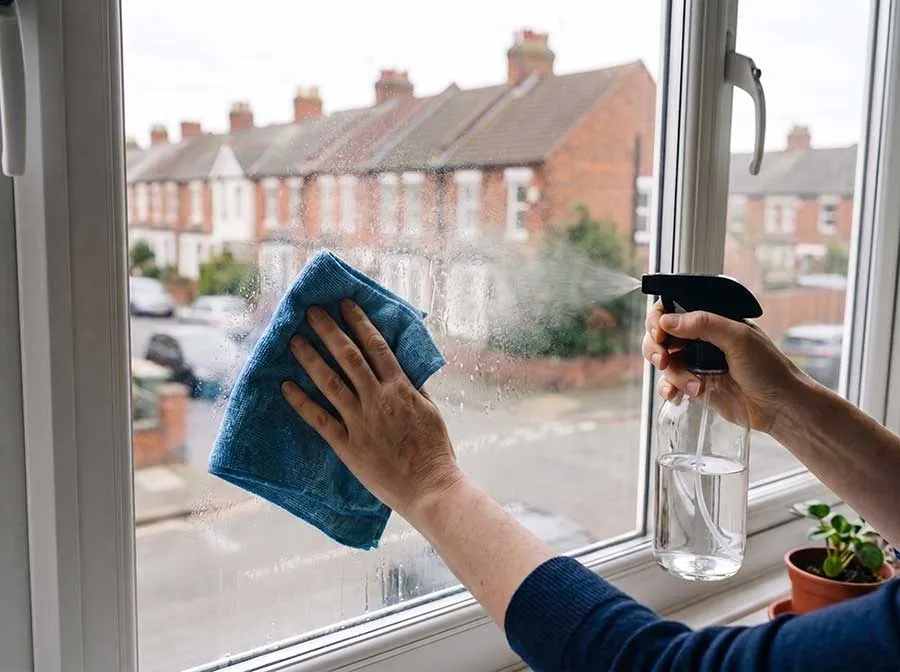
The two most effective DIY window cleaning solutions are white vinegar and water (1:1) or a few drops of washing-up liquid in warm water.
Option 1 — White vinegar and water
One part warm water to equal parts white vinegar in a spray bottle. Popular in UK homes for good reason — it cuts through grease, dries clean, and leaves no residue. The smell disappears within minutes of drying.
Option 2 — Washing-up liquid and water
A few drops of dish soap — not a squeeze — in warm water. Fairy or any supermarket equivalent works fine. Too much is the most common mistake.
Avoid: heavily fragranced window sprays, furniture polish, all-purpose cleaners, and anything oil-based — including WD-40. All of them leave a film that causes the streaks you are trying to get rid of.
Step by Step
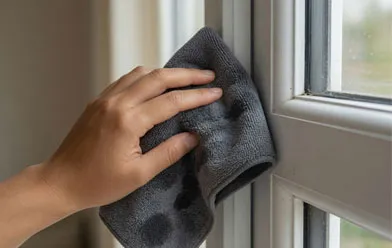
Step 1 — Clean the frame first
Wipe the frame and sill with a damp cloth before touching the glass. Dust dislodged from a wet frame drips straight onto clean glass. One minute here saves you doing the glass twice.
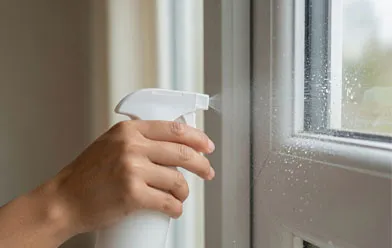
Step 2 — Apply your mix sparingly
Mist the glass lightly — damp, not dripping. Too much liquid takes longer to remove and is more likely to dry before you wipe it away.
Step 3 — Wipe, buff, and check
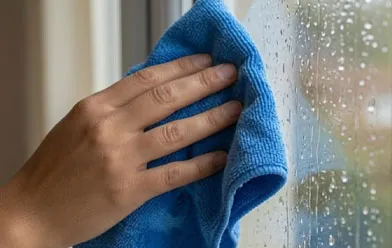
Start at the top and wipe the glass with your damp microfibre in straight lines — never in circular motions. Immediately switch to your dry cloth and buff before the liquid evaporates. Dry the edges where glass meets frame, then check at an angle in natural light. Any residue left shows up instantly this way.
How to Clean uPVC Window Frames
uPVC frames collect grime, algae, and staining that glass cleaning alone does not address.
For general dirt, a damp microfibre with your vinegar and water mix will deal with most build-up. Work along the frame in sections and dry as you go.
For stubborn stains, apply a small amount of cream cleaner on a damp cloth. Apply, leave for a minute, then wipe and rinse. Avoid abrasive pads — they permanently scratch the surface.
One thing worth knowing: always clean frames before glass, as anything you dislodge from the frame will end up on the pane below.
How to Clean Outside Windows
Ground Floor
The method is the same as inside. Rinse first, scrub top to bottom with a damp microfibre or sponge, then squeegee and dry the edges. Use cool water for your final rinse — on a warm day, hot water evaporates faster and increases the chance of marks.
How to Clean First-Floor Windows Without a Ladder
For first-floor and above, use a telescopic extension pole from the ground — not a ladder. A pole with a scrubber head on one end and a squeegee on the other lets you clean first-floor glass without ever leaving the ground.
This is where most DIY window cleaning injuries occur, and it is entirely avoidable. Basic kits from brands like Ettore and Unger are available at B&Q and Amazon for around £20–40. It is the same principle professional window cleaners use — just without the purified water system.
You do not need to climb anything.
A Safety Point From Experience
Years of cleaning windows at height taught us one thing: look up and you stop noticing what is beneath your feet.
This is how people step off edges, catch uneven ground, or lose balance — not because they slipped, but because they were not looking down.
The rule to follow: before moving, look down first. Check your footing, then move. It sounds obvious. It is easy to forget when you are focused on a dirty window above you.
Apply it every time you shift position and you remove the most common cause of DIY cleaning injuries.
Squeegee Technique for Outside Glass
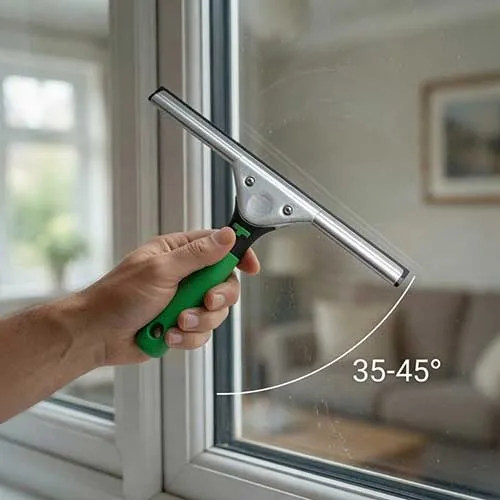
- Hold the blade at 30–45 degrees to the glass
- Work in overlapping strokes from top to bottom
- Wipe the blade after every pass — a dirty blade puts streaks straight back on the glass
- Overlap each stroke by 2–3 cm
- Dry the bottom edge where water pools at the end
A cheap squeegee used correctly beats an expensive one used badly every time.
One more tip: wipe the inside pane side to side and the outside pane top to bottom. If a streak appears, the direction tells you straight away which side it is on — so you know exactly where to go back and fix it.
The Biggest Mistakes
- Cleaning in direct sunlight — liquid evaporates before you remove it. Work in shade or on an overcast day
- Too much washing-up liquid — excess soap is the main cause of streaky interior glass
- One cloth for everything — cleaning and buffing with the same cloth moves dirt in circles
- Skipping the edge dry — the glass-to-frame border holds water that streaks the pane below
- Using kitchen roll — it sheds lint and leaves fibres on the glass
- Looking up while moving at height — always check your footing before shifting position
How Professional Window Cleaners Do It
People often ask: how do window cleaners get windows so clean? For interior glass especially, the method is closer to DIY than most people expect.
For exterior windows we use a water-fed pole system with purified water. We filter out all minerals completely, so the water dries clean with no wiping needed. No residue, no streaks, no ladder risk. It consistently delivers the best results — something our clients across Nottingham notice straight away.
For interior windows on smaller jobs, we use two microfibre cloths and a cleaning mix, exactly as described above.
On larger jobs or in rooms with many panes, we switch to Unger ErgoTec Ninja squeegees matched to each pane width. For interior glass up to about three metres high, we use the Vikan EasyShine system with a telescopic handle and ultra-microfibre pads.
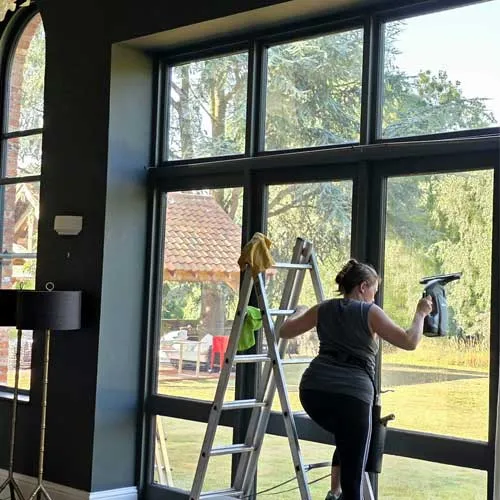
Our preferred tool for most interior work in recent years has been a professional Kärcher window vacuum. In one pass it removes all dirty water — no drips, no residue, no wet floors. Faster than a squeegee and crystal clear every time.
None of this is necessary for cleaning your own windows at home. The difference is not a secret cleaning product, It is the right tool for the right surface.